
Views: 0 Author: Site Editor Publish Time: 2026-05-06 Origin: Site


Can you use standard aluminum coil to emboss? For a hobbyist operating a small die-cut machine, the answer is yes. You can easily texturize thin household foil. But industrial manufacturing demands continuous cold-roller processing of heavy-duty aluminum. This distinction changes everything.
For manufacturers and contractors, attempting to emboss flat coils in-house rarely makes sense. You face expensive tooling costs. You also risk severe material deformation. The tooling expenses easily outweigh any perceived benefits. Instead, industry leaders procure pre-processed Embossed Aluminium Coil directly from specialized mills.
This guide strips away consumer-level DIY noise. We provide a strict engineering and procurement framework. You will learn how to evaluate exact physical requirements. We will show you how to select the right alloys, patterns, and surface finishes. These choices ensure success across architectural, commercial, and industrial applications.
Process Reality: Industrial embossing is a cold-rolling process that induces "work hardening," fundamentally increasing the metal's structural rigidity and surface strength without heating.
Alloy Selection is Primary: Success depends on matching the alloy grade (e.g., 3003 for general anti-corrosion, 5052 for marine-grade load-bearing) to the operating environment.
Function Over Form: Patterns are engineered for physics, not just aesthetics. For example, aluminium stucco embossed coils maximize thermal transfer and hide surface imperfections, while hammered finishes optimize light reflectivity.
Sourcing Efficiency: Specifying the correct surface finish (e.g., Kraft paper cladding or Blue Polymer) at the coil procurement stage eliminates downstream manufacturing bottlenecks.
Many procurement teams consider buying flat coil. They plan to stamp patterns internally. We strongly advise against this approach for large-scale production. In-house processing creates massive bottlenecks.
Stamping flat coil requires tremendous force. You press a heavy die into the metal sheet. This process works well for small, individual parts. However, stamping continuous coil runs is inefficient. You risk material flattening. Tension control becomes highly inconsistent. Your equipment overhead quickly balloons.
Stamping machines process metal in batches. This creates uneven textures along the coil length. It also causes micro-fractures in softer alloys. You lose valuable production time managing these defects.
Global top manufacturers use a different method. They utilize a continuous cold-rolling process. The factory passes the flat substrate through massive, synchronized rollers. These rollers carry the inverse design of the desired pattern.
This method maintains strict thickness tolerances. You typically see variations limited between 0.25 mm and 3.0 mm. The process retains the base metal's core mechanical properties. The pattern remains perfectly uniform over miles of coil. You eliminate tension issues completely.
Roller embossing provides a distinct metallurgical advantage. We call this phenomenon "work hardening." The extreme pressure of the embossing rollers alters the crystal structure. It naturally hardens the aluminum.
You achieve higher structural rigidity without adding heat. Buyers can specify slightly thinner, lighter gauges. You save weight. You save material volume. You never sacrifice overall panel strength.
Production Factor | In-House Stamping | Pre-Processed Roller Embossing |
|---|---|---|
Methodology | Batch processing via die presses | Continuous processing via synchronized rollers |
Thickness Uniformity | Prone to flattening and inconsistency | Highly uniform (0.25 mm to 3.0 mm) |
Structural Impact | Risk of micro-fracturing | Increases strength via work hardening |
Equipment Overhead | High (expensive dies, presses) | None (outsourced to supplier) |
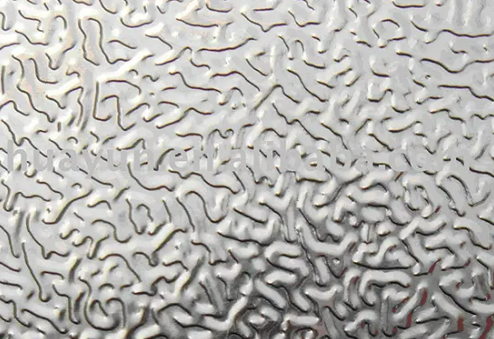
Engineers do not choose embossed metals for looks alone. The texture provides specific engineering outcomes. Let us explore the practical reasons you should specify textured coils.
Consider this a major quality-control benefit. Flat aluminum reveals every tiny flaw. Embossed textures naturally hide surface scratches. They mask minor dents and fingerprints. This concealment drastically reduces reject rates during downstream assembly.
This feature proves crucial for appliance manufacturing. It also benefits architectural wall panels. Workers can handle the material faster. They worry less about cosmetic damage.
Specific patterns increase the surface friction coefficient. This metric is essential for safety applications. Industrial flooring demands high grip. The 3D texturing also increases the overall surface area.
This shape modification improves the stiffness-to-weight ratio. A patterned sheet resists bending better than a flat sheet of equal weight. You achieve better structural performance compared to flat steel. You also gain significant weight reductions.
Increased surface area changes thermodynamic physics. The textured surface disrupts boundary layers in airflow. This disruption directly correlates to improved heat dissipation. It also boosts overall thermal transfer.
HVAC engineers rely heavily on this property. It makes embossed coil a non-negotiable component for refrigeration manufacturing. The metal absorbs and sheds heat faster. System efficiency rises naturally.
Best Practice: Always evaluate the primary performance goal before selecting a texture. If thermal transfer is your priority, avoid aggressive tread patterns. Focus on micro-textures instead.
Alloy selection dictates project success. You must match the metal grade to its operating environment. A poor choice leads to rapid corrosion or structural failure.
We frame this as the economical baseline. The 1000 series offers near pure aluminum. It boasts high thermal conductivity. It provides excellent corrosion resistance. However, it exhibits lower tensile strength.
It bends easily without cracking. It requires minimal force to shape. Therefore, it suits low-stress environments.
Best for: Appliance liners.
Best for: Decorative indoor ceilings.
Best for: Non-load-bearing insulation jackets.
This series represents the industry standard. It delivers balanced overall performance. Manufacturers add manganese to the alloy. This addition provides roughly 20% more strength than the 1000 series.
It resists moisture brilliantly. It handles moderate structural loads well. You will find it in countless commercial projects.
Best for: Outdoor architectural cladding.
Best for: Standard commercial roofing.
Best for: HVAC ducting and components.
Consider this the high-performance tier. It offers extreme durability. Magnesium alloying creates exceptional resistance to saltwater corrosion. It also yields a very high load-bearing capacity.
This metal handles brutal conditions. It resists impacts effectively. It supports heavy foot traffic.
Best for: Marine environments and boat components.
Best for: Transportation vehicle flooring.
Best for: Heavy industrial settings.
Alloy Series | Primary Alloying Element | Relative Strength | Corrosion Resistance | Ideal Applications |
|---|---|---|---|---|
1000 (1060/1100) | None (Pure Aluminum) | Low | Excellent | Appliance liners, indoor decor |
3000 (3003/3004) | Manganese | Medium | Very Good | HVAC, exterior cladding |
5000 (5052/5005) | Magnesium | High | Exceptional (Marine) | Marine flooring, industrial walkways |
Engineers design patterns for physics. They rarely design them just for aesthetics. You must match the specific texture to your required performance returns.
Mechanism: This pattern features tight micro-texturing. It drastically reduces light glare. It noticeably increases the overall surface area compared to a flat sheet.
Application: It stands as the dominant choice for refrigeration liners. The texture maximizes heat exchange inside the unit. You will also see aluminium stucco embossed coils used extensively for exterior insulation jacketing. It protects delicate insulation from weather and impacts.
Mechanism: This pattern features raised, aggressive protrusions. Engineers designed it to channel liquids away quickly. It aggressively grips industrial footwear to prevent slipping.
Application: You use this for transport vehicle flooring. It protects industrial catwalks. Manufacturers rely on it for heavy-duty toolboxes and truck beds.
Mechanism: This texture mimics hand-hammered metal. It scatters light highly efficiently. When you pair it with a mirror-finish substrate, it can achieve up to 85% light reflectivity.
Application: It dominates commercial lighting reflectors. Engineers use it for solar energy concentrators. Architects specify it for high-end interior aesthetics. The texture makes small rooms feel much larger.
Mechanism: These represent deep, continuous channels. They are engineered strictly for fluid displacement and structural rigidity over long spans.
Application: You see it in chemical plant insulation protection. It serves as standard roofing where rapid water drainage is critical. The deep waves prevent pooling completely.
The base metal provides strength. The pattern provides physical function. The surface finish provides ultimate environmental defense. You must specify the correct coating.
Anodizing involves an electrochemical process. It artificially deepens the metal's natural protective oxide layer. You get a harder, more scratch-resistant surface. It never peels or flakes.
Mirror finishes serve a different purpose. Manufacturers often apply them to pure 1070 alloys. You use them strictly for energy-saving reflectivity. They bounce ambient light around architectural spaces. This reduces reliance on artificial lighting.
We specify this finish for a precise industrial use-case. Factories laminate heavy Kraft paper to the underside of the coil. You use it when wrapping commercial pipeline insulation.
The paper prevents galvanic corrosion. Galvanic corrosion happens when aluminum touches dissimilar metals. The paper also stops condensation buildup. It absorbs minor moisture before it ruins the insulation.
We frame this as the premium defense mechanism. A Surlyn coating provides a flawless moisture barrier. It performs far better than standard paint.
You use it in highly corrosive environments. Power plants demand it. Chemical processing facilities rely on it. It resists acidic runoff. It handles harsh airborne chemicals effortlessly.
Common Mistake: Do not use standard painted aluminum for underground pipe jacketing. Soil moisture will quickly degrade the paint. Always specify a Surlyn or Blue Polymer coating for subterranean or highly corrosive insulation environments.
Finding a reliable supplier requires strict vetting. You must look beyond simple pricing. Ensure your supplier understands metallurgical science. Follow this checklist when issuing Requests for Quotes (RFQs).
Specify Precise Tolerances: Advise your engineering team to outline exact thickness requirements. You must account for the embossed profile thickness versus the actual base metal thickness. Specify the exact width. Detail the required temper state (e.g., H12 to H28). This prevents soft metal failures.
Verify Production Methodology: Ensure the supplier utilizes continuous roller embossing. Ask them directly about their machinery. You must avoid batch stamping. Continuous rolling guarantees pattern uniformity across long coil runs.
Evaluate Compliance & Testing: Recommend shortlisting manufacturers who provide transparent chemical composition reports. They must offer tensile strength data sheets. Ensure these sheets match their specific alloy batches. Ask for compliance with international testing frameworks like ASTM B209.
Let us review the final verdict. You technically can emboss aluminum in-house. However, scaling production efficiently requires sourcing factory-rolled embossed aluminium coil. In-house processing simply introduces too many quality risks. It wastes valuable capital on tooling.
Your next steps require clear internal alignment. Encourage your engineers and procurement officers to finalize their required physical outcome. Decide if you need thermal transfer, light reflectivity, or slip resistance. This decision dictates your exact alloy. It determines your pattern, like stucco. It confirms your required surface cladding. Once you establish these metrics, you can confidently request supplier samples.
A: Embossing creates a raised profile on the metal. It pushes the pattern outward. Debossing creates a recessed profile. It presses the pattern inward. Both processes use similar continuous roller principles. However, they require fundamentally different inverse die tooling on the machine rollers.
A: No, it typically increases structural rigidity. The extreme pressure induces work hardening. This aligns the metal's internal grain structure. However, extreme deep-drawing patterns require specific pliable temper states. You must choose the right temper to prevent micro-fracturing during processing.
A: In many cases, yes. Aluminum is one-third the weight of steel. It generally proves more cost-effective. It offers natural corrosion resistance. However, stainless steel remains superior for specific conditions. You must use steel for extreme high-impact zones or ultra-high-temperature environments.


 English


