
Views: 0 Author: Site Editor Publish Time: 2026-05-15 Origin: Site


What exactly is an Embossed Aluminium Coil? It is a specialized flat-rolled aluminium product subjected to a rigorous cold-rolling process. Heavy machinery feeds the metal through patterned rollers, creating distinct raised or depressed textures across the surface. Many people mistakenly view these patterns as purely decorative additions. However, embossing fundamentally alters the material's physical and optical properties. It increases surface rigidity, masks handling defects, improves thermal dissipation, and reduces harsh metal glare.
Understanding these functional shifts helps you make better material choices. This guide provides procurement managers and project engineers with a clear, evidence-based framework. You will learn how to evaluate specifications, match specific alloys to your applications, and thoroughly vet manufacturing partners to ensure project success.
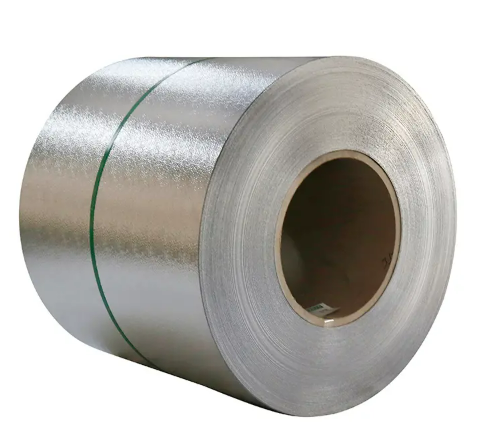
Embossing is a cold-rolling process that increases the surface area and functional rigidity of the coil without altering the substrate's base mechanical properties.
Pattern geometry dictates function: For example, 5-bar patterns offer multi-directional slip resistance, while aluminium stucco embossed coils are engineered for thermal insulation and appliance paneling.
Advanced composite treatments (like Kraft paper cladding or polymer films) elevate embossed coils from standard building materials to harsh-environment industrial solutions.
Effective procurement relies on verifying Mill Test Certificates (MTCs), processing tolerances (target +/-0.01mm to 0.02mm), and appropriate alloy selection for environmental load.
Embossing applies immense mechanical pressure without introducing heat. Manufacturers pass bare aluminium through synchronized, engraved steel rollers. This physical compression creates a work-hardening effect. Work-hardening marginally increases the panel's stiffness and tensile strength. You can leverage this physical transformation to specify thinner material gauges. Thinner gauges reduce overall material consumption without sacrificing structural integrity. By eliminating thermal treatments during this stage, the metal retains its fundamental crystalline structure. It simply gains a robust, textured outer profile.
The resulting texture delivers two distinct categories of benefits: optical and physical. On the optical side, the newly textured surface diffuses light efficiently. It scatters rays rather than reflecting them directly. This minimizes reflectivity and eliminates light pollution (glare) across large architectural facades and industrial roofing. On the physical side, embossing dramatically increases the overall surface area. More surface area improves heat transfer efficiency. Engineers actively exploit this trait for HVAC ducting and commercial refrigeration components.
Industry standards mandate strict dimensional controls during production. Variances can ruin a production run or compromise structural safety. Buyers must understand the typical processing realities found in modern mills.
Specification Parameter | Standard Industry Range | Engineering Impact |
|---|---|---|
Base Thickness | 0.25mm to 3.0mm | Determines fundamental load-bearing capacity before work-hardening. |
Embossing Depth | 0.08mm to 0.25mm | Dictates slip-resistance quality and surface area expansion. |
Width Limits | Typically up to 1500mm | Impacts seamless coverage for large paneling projects. |
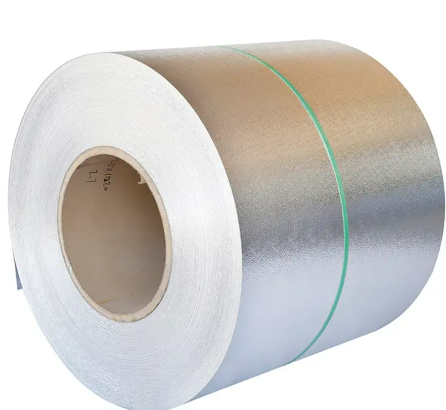
The market often confuses stucco and orange peel finishes, yet they serve entirely different engineering needs. Stucco features a rougher, highly irregular topography. This aggressive texture breaks up moisture pathways. It proves highly effective for external pipe insulation, roofing, and HVAC jacketing. Conversely, the orange peel pattern is significantly finer and more uniform. Appliance manufacturers rely heavily on it. It lines the interiors of commercial refrigerators. The subtle bumps hide manufacturing scratches and enhance thermal conductivity across the cooling unit.
Safety environments demand specific geometric patterns. The 5-bar tread design dominates this sector. It features raised, elongated bumps situated at precise 60 to 80-degree angles to one another. This alternating geometry provides multidirectional grip. Whether a worker steps forward, backward, or diagonally, their footwear catches a raised edge. You will see this pattern primarily on industrial flooring, transport vehicle beds, and heavy-duty structural stairs. Single diamond patterns offer similar traits but focus more on aesthetic symmetry.
Niche applications require specialized tooling. Hemispherical patterns consist of perfectly rounded raised domes. These domes offer distinct pressure-buffering properties. They act as tiny shock absorbers in high-wear friction zones, protecting underlying cargo or machinery. Hammered finishes mimic traditional hand-forged metal. Architects specify hammered textures for heavy-duty exterior paneling. The deep, random indentations mask urban grime and resist minor impact dents from debris.
Selecting the correct base alloy is just as critical as choosing the surface pattern. The underlying chemistry dictates how the metal responds to stress, moisture, and fabrication. We can map these alloys across three primary series used in commercial embossing.
Alloy Series | Primary Composition | Key Characteristics | Best Application Matches |
|---|---|---|---|
1000 Series (e.g., 1050, 1060) | Pure Aluminium (99%+) | Highly ductile, excellent formability, maximum thermal conductivity. Low structural strength. | Internal appliance components, basic insulation jacketing, low-stress environments. |
3000 Series (e.g., 3003, 3105) | Manganese-alloyed | The absolute industry standard. Balances excellent corrosion resistance with strong formability. | HVAC ducting, chemical plant desulfurization insulation, general commercial construction. |
5000 Series (e.g., 5052) | Magnesium-alloyed | High tensile strength, exceptional marine-grade rust resistance, rigid structure. | Heavy-industry flooring, corrosive coastal environments, transport load-bearing beds. |
When you evaluate a project, never default to the cheapest alloy. A 1000 series coil will fail rapidly if used for coastal marine flooring. Similarly, over-specifying a 5000 series alloy for a simple indoor refrigerator lining wastes budget and introduces unnecessary machining difficulties.
Raw embossed metal only goes so far in extreme environments. Manufacturers now fuse embossed coils with advanced surface treatments. These composite solutions transform standard metal into highly specialized industrial barriers. Here are the four most vital integration techniques.
Color-Coated (Prepainted) Embossed Coils: The white goods sector consumes massive quantities of prepainted stock. A classic example is a 0.4mm brown-gray orange peel coil. It serves as the outer side panel for modern refrigerators. The paint adds aesthetic value, while the underlying embossing conceals handling scratches. This combination delivers exceptional energy-saving thin-gauge strength.
Kraft Paper Clad: This involves laminating a specialized moisture-barrier composite backing directly onto the aluminium. It proves critical for heavy pipeline insulation. The Kraft paper prevents condensation buildup between the metal jacket and the steel pipe beneath it. By isolating the metals and blocking moisture ingress, it completely halts galvanic corrosion.
Polymer / Surlyn Films: Highly caustic environments require aggressive protection. Mills apply thick blue polymer coatings (typically around 76 microns) post-embossing. This Surlyn film acts as an impenetrable barrier. Petrochemical refineries and power plants specify this treatment to survive extreme chemical exposure and acidic rain.
Anodized & Mirror Finishes: High-end architectural facades and renewable energy projects demand exact light-handling properties. Anodizing thickens the natural oxide layer, locking in a permanent, weather-proof finish. Mirror polishing prior to embossing creates solar thermal reflectors. They capture and diffuse sunlight with mathematically guaranteed efficiency.
Sourcing the right material requires vetting the factory as intensely as the product. A supplier's processing capabilities directly impact your production lines. Use this specific evaluation framework to separate premium partners from basic commodity brokers.
Tolerance and Capacity Constraints: Precision matters. Verify the mill's ability to hold thickness tolerances strictly between +/-0.01mm to 0.02mm. Loose tolerances lead to jamming in your stamping machines. Additionally, assess their capacity for handling varied custom weights. Can they efficiently ship standard 2.5-ton export coils, or can they accommodate customized 100-200kg mini-coils for niche fabrication lines?
Quality Documentation (MTCs): Transparency separates reliable mills from risky ones. Insist on reviewing historical Mill Test Certificates before signing a contract. Ensure the documented tensile strength and yield strength map correctly to the specified alloy and temper designation (such as 3003-H14).
Slitting and Cut-to-Length Services: Factory-level deep processing is a massive value-add. Assess if the supplier offers in-house precision cutting. Receiving pre-slit widths reduces your secondary handling efforts and drastically cuts material waste on your factory floor.
Export and Compliance Realities: International transit destroys poorly packaged metal. Vet the supplier's export packaging standards meticulously. Look for fumigated wooden pallets, multiple layers of waterproof plastic film, and robust strapping. Discuss coil orientation—eye-to-sky packaging suits certain forklifts, while eye-to-wall suits others. Note that standard global Minimum Order Quantities (MOQs) typically range from 3 to 5 tons.
We must stop viewing an embossed aluminium coil as a simple, single commodity. It represents an engineered matrix combining precise geometric patterns, deliberate alloy chemistry, and targeted surface treatments. Every choice you make alters its performance.
Before issuing your next Request for Quotation (RFQ), map your exact environmental stressors. Identify your load-bearing needs, potential salt spray exposure, and thermal dissipation requirements. Once you define these parameters, contact technical sales teams directly. Ask for physical prototype samples. Request specific Mill Test Certificates. Validating production capabilities early guarantees your final installation will endure exactly as designed.
A: Stucco features a rougher, highly irregular topography. Builders rely on it for heavy industrial insulation and roofing because it disperses moisture well. Orange Peel presents a much finer, uniform texture. Consumer appliance manufacturers prefer it for refrigerator interiors because it expertly hides handling defects while improving thermal transfer.
A: No. Embossing is a strict cold-working process. Rather than weakening the metal, the pressure creates a work-hardening effect. This physical transformation marginally increases the overall rigidity and tensile strength of the panel, often allowing you to safely reduce the material gauge.
A: When you specify the correct alloy—such as 3003 or 5052—and apply appropriate environmental coatings like PVDF or anodizing, the material excels outdoors. In typical applications, its service life reliably exceeds 20 years without suffering significant structural degradation or severe oxidation.


 English


