
Views: 0 Author: Site Editor Publish Time: 2026-06-23 Origin: Site


Material selection sets the foundation for manufacturing success or failure. Choosing the wrong metal stock frequently leads to cracking during fabrication, premature corrosion in the field, or unnecessary budget bloat. Engineers and procurement managers regularly evaluate 3003 and 5052 alloys. They represent two of the most widely specified options for industrial fabrication across global sectors. However, distinct alloying elements dictate entirely different use cases for these versatile metals. A misaligned specification costs both time and money. This article provides a rigorous, evidence-based comparison for decision makers. We aim to help you determine exactly which industrial aluminium coil matches your project’s mechanical and financial requirements. You will discover fundamental differences in chemical makeup, shop floor workability, and real-world performance. We also share practical tips to avoid costly manufacturing mistakes while streamlining your material procurement strategy.
Alloy Foundation: 3003 relies on manganese for excellent formability, while 5052 uses magnesium for superior strength and saltwater resistance.
Strength & Bending: 5052-H32 offers significantly higher yield strength than 3003-H14 but requires more generous bend radii to prevent cracking.
Cost Efficiency: 3003 is generally the more cost-effective option for non-structural, general-purpose applications.
Environment: 5052 is the non-negotiable standard for marine environments and heavy-duty structural enclosures.
Every industrial metal relies on its core metallurgical recipe. Chemical composition dictates every downstream property, from ultimate tensile strength to surface finish quality. The industry assigns specific four-digit designations to classify these elemental families accurately.
This family primarily relies on manganese as its major alloying element. The 3003 alloy usually contains about 1.2% manganese by weight. This specific addition increases overall strength by roughly 20% compared to the pure 1100 series aluminum. It achieves this strength bump without sacrificing essential workability. Fabricators highly value it because it responds beautifully to standard fabrication processes. You can roll, stamp, and draw it effortlessly. The resulting grain structure allows extensive deformation before structural failure occurs.
This series takes an entirely different metallurgical approach. It primarily utilizes magnesium at roughly 2.5%, alongside a critical trace of chromium. The magnesium addition transforms it into one of the highest-strength non-heat-treatable alloys available today. You gain structural integrity through cold working rather than thermal treatment. Furthermore, the chromium trace provides exceptional resistance to marine atmospheres. It effortlessly withstands salt-water corrosion. This inherent resistance makes it a staple in harsh outdoor environments.
Alloy Designation | Primary Alloying Element | Manganese (%) | Magnesium (%) | Chromium (%) |
|---|---|---|---|---|
3003 | Manganese | 1.0 - 1.5 | - | - |
5052 | Magnesium | 0.10 Max | 2.2 - 2.8 | 0.15 - 0.35 |
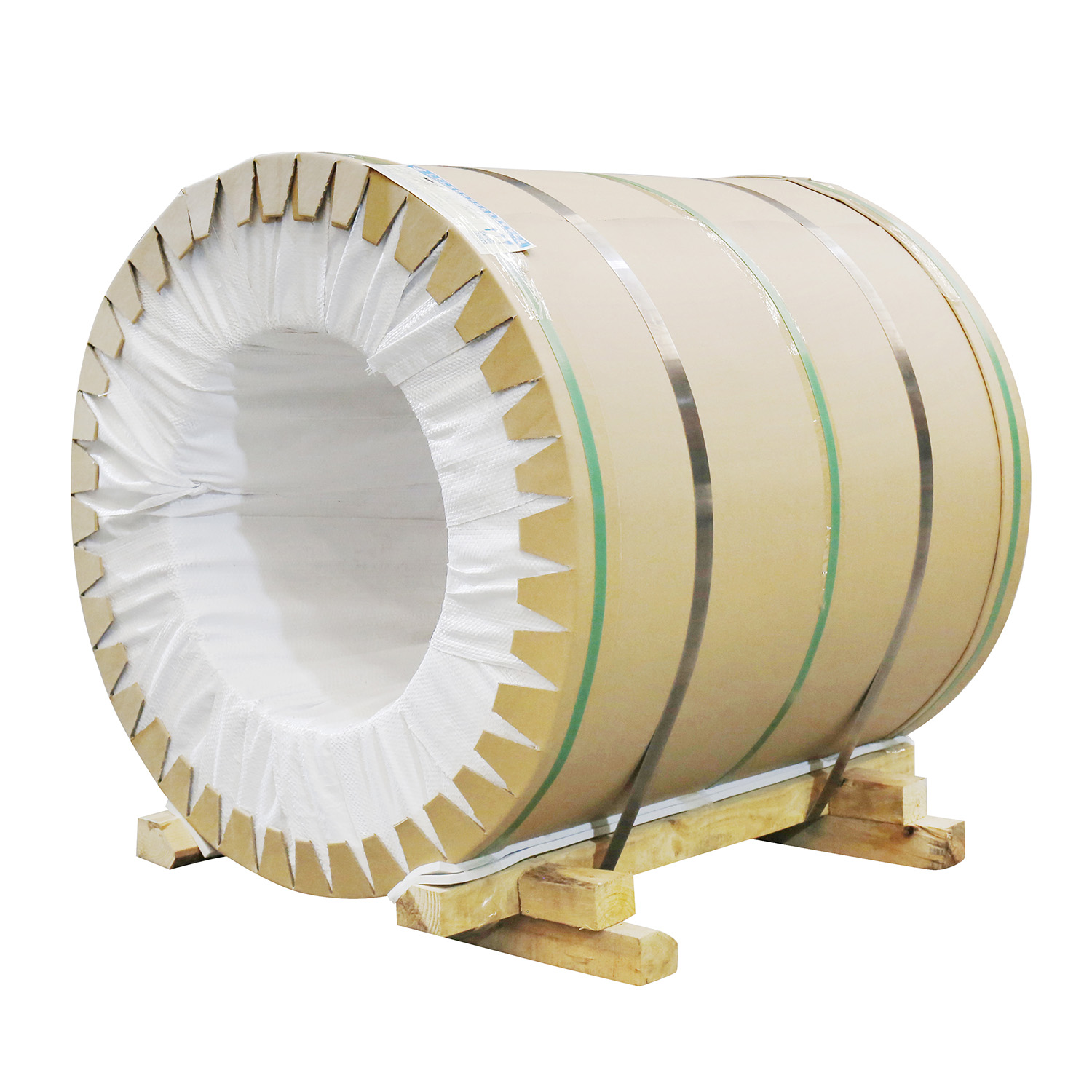
Bare alloy comparisons remain inherently insufficient for modern manufacturing environments. True evaluation requires looking at specific tempers. Strain hardening drastically alters how these materials behave on the shop floor. We will examine the H14 temper for 3003 and the H32 temper for 5052. These represent the standard industry baselines.
Strength dictates structural viability. The 5052-H32 material significantly outperforms 3003-H14 across both tensile and yield strength metrics. It boasts an ultimate tensile strength approaching 33 ksi, while 3003-H14 hovers around 22 ksi. This substantial difference makes the 5000-series metal highly suitable for load-bearing applications. You can safely deploy it in high-stress environments where structural failure risks human safety or equipment damage.
Formability measures how much punishment the metal takes before fracturing. The 3003-H14 provides exceptional, tighter bend radii capabilities. Fabricators often achieve zero-T to 1-T bends depending on the gauge thickness. This happens while carrying a minimal risk of surface fracturing. Conversely, 5052-H32 remains formable but acts inherently stiffer. It requires much larger minimum bend radii. Press brake setups must be highly precise to avoid severe springback. Operators must also watch out for micro-cracking along the external bend line. You often need to over-bend the material slightly to achieve the desired final angle.
Vibration destroys weak metals over time. The 5052 alloy possesses vastly superior fatigue strength. It stands as the demonstrably better choice for structures subjected to continuous vibration. Engineers prefer it for vehicle panels, generator housings, and heavy machinery enclosures. The material resists crack propagation over millions of stress cycles.
Mechanical Performance Matrix Chart | ||
Performance Metric | 3003-H14 Specifications | 5052-H32 Specifications |
|---|---|---|
Ultimate Tensile Strength | ~ 22,000 psi (22 ksi) | ~ 33,000 psi (33 ksi) |
Yield Strength | ~ 21,000 psi (21 ksi) | ~ 28,000 psi (28 ksi) |
Elongation (in 2 inches) | ~ 16% | ~ 12% |
Fatigue Strength | Moderate | Excellent |
Theoretical numbers matter, but actual shop floor behavior dictates production efficiency. Operators face daily challenges regarding joining, finishing, and inventory management.
Both alloys accept standard welding procedures easily. However, 5052 generally takes priority for structurally critical welds. Professional welders often use 5356 filler wire for these joints. This combination provides excellent fusion and maintains high joint integrity. The 3003 alloy easily accepts welding techniques, typically utilizing 4043 filler wire. However, it requires highly careful heat management during the process. Poor heat control risks reducing the strength in the heat-affected zone (HAZ). Operators must monitor travel speeds to minimize this localized weakening.
Aesthetics drive many consumer-facing product designs. The 5052 material provides a remarkably smoother, clearer finish upon anodizing. It accepts dyes evenly and maintains a premium metallic look. The 3003 alloy tends to display a yellowish or brownish tint after the anodizing process. This discoloration stems directly from its dissolved manganese content. It forms intermetallic particles during anodization. Therefore, you should avoid it for cosmetic anodized parts unless utilizing dark, opaque dyes.
Mixed material inventory happens frequently on busy shop floors. If workers lose mill certs, you need practical differentiation methods immediately. Physical testing provides a quick, reliable fallback strategy.
Follow these sequential steps to identify unknown stock:
Assess baseline surface hardness by conducting a basic manual scratch test.
Note the resistance level. The 5052 alloy feels noticeably harder under pressure.
Perform an aggressive 90-degree bend test on a scrap offcut using a tight radius.
Observe the metal behavior closely. The 3003 alloy will bend sharply without showing visible stress lines.
Check for resistance and crazing. The 5052 material will actively resist the bend and potentially fracture at tight radii.
Aligning the specific alloy to its final application ensures long-term product success. Different environments demand highly specific material properties. Choosing correctly prevents catastrophic field failures.
This versatile material shines in environments demanding high workability over absolute strength. It dominates industries requiring complex shaping.
Applications: HVAC ductwork systems, food handling equipment, chemical handling tanks, builder's hardware, and general sheet metal work.
Success Criteria: You need low cost, complex forming requirements, and face very low structural stress. It performs perfectly when the material only needs to support its own weight.
This robust alloy dominates rugged environments. It excels where material failure carries high consequences.
Applications: Marine hardware, electronic chassis components, transportation equipment, pressure vessels, and architectural facades.
Success Criteria: Your project demands high vibration tolerance and exposure to corrosive marine environments. You also require a high strength-to-weight ratio to reduce overall assembly mass safely.
Procurement managers need a structured approach to decision making. Using a standardized checklist prevents costly specification errors before issuing purchase orders.
Assess if your project truly justifies a premium material cost. The 5052 variant typically costs more than the highly economical 3003 option. If your application lacks high stress or corrosive elements, specifying the stronger alloy simply wastes money. You must carefully balance required performance against available project funds.
Verify your current shop tooling limits. Can your equipment handle increased stiffness and severe springback? The 5052 alloy might slow down automated production cycles if tools lack proper calibration. Thicker gauges of stiff materials rapidly wear out improper press brake dies. You must ensure your maintenance schedules accommodate these tougher physical properties.
Confirm all environmental exposure constraints early in the design phase. Apply a simple rule of thumb here. If the final component touches saltwater or road salt, default directly to 5052. The resulting corrosion resistance prevents premature field failures and expensive warranty claims.
Both materials serve as massively standard industry alloys. Finding them rarely poses an issue. However, you must ensure your chosen supplier can provide the exact specific temper and gauge required. They must possess the capability to deliver these materials in continuous aluminium coil formats. Consistent width and edge quality remain paramount for automated uncoiling equipment.
The choice between 3003 and 5052 alloys is rarely about one being objectively "better." It involves strictly aligning specific physical limits to your internal manufacturing process and the final end-use environment. Both metals offer incredible utility when deployed correctly. We highly recommend running a targeted pilot test first. Acquiring small sample coils lets you verify press brake tooling compatibility before you fully commit to a massive bulk purchase. Taking this extra step prevents unexpected production bottlenecks. Finally, always encourage your buying teams to request official mill certificates. Consult deeply with your dedicated material supplier to finalize the technical specification safely.
A: The 6061 variant is a heat-treatable alloy offering even higher strength and machinability than 5052. Manufacturers often use it in plates or extrusions. However, it is much less commonly sourced as a continuous coil for sheet metal forming because of its high rigidity.
A: No. While the 3003 alloy boasts good general corrosion resistance, it degrades much faster than 5052 in saltwater environments. Marine applications demand the superior magnesium-based protection found in 5052 to prevent rapid deterioration.
A: The 3003 alloy remains the industry standard for drawn aluminum tubing, especially in HVAC and refrigeration. It offers excellent workability. Engineers specify 5052 tubing only when applications require higher hydraulic pressure or greater structural rigidity, such as aerospace systems.


 English


