
Views: 0 Author: Site Editor Publish Time: 2026-05-08 Origin: Site


Selecting the correct gauge for an Embossed Aluminium Coil is a balancing act between material formability, structural rigidity, and end-use application requirements. Procurement managers, manufacturing engineers, and architectural contractors face this complex specification challenge daily. Specifying a gauge too thin risks critical material tearing during the roller-die process or eventual field application. Conversely, over-specifying thickness wastes capital and causes unnecessary machine wear on processing equipment. You need a precise material match to ensure long-term project success. This guide breaks down standard gauge ranges and explores the crucial interaction between alloy selection and thickness. You will learn how to define material specifications accurately to balance structural functionality, visual aesthetics, and project budgets.
Standard Thickness Range: Most commercial embossing for aluminum falls between 0.010" and 0.063" gauge, heavily dependent on the chosen pattern and structural requirement.
Alloy Dictates Gauge Efficiency: Using stronger base metals (like Alloy 3003) allows for thinner gauges without sacrificing structural integrity, outperforming standard 1100-grade aluminum.
The "Rigidity Illusion": The embossing process inherently increases the surface area and physical stiffness of the coil without actually changing the original metal thickness.
Pattern-Specific Tolerances: Aggressive textures (like diamond tread) require heavier gauges than micro-textures (like aluminium stucco embossed coils) to prevent material stress.
Manufacturers press patterns into flat sheet metal using heavy-duty roller dies. This mechanical process alters the surface texture but does not change the true thickness of the base metal. You might hear engineers refer to this phenomenon as the "rigidity illusion." The metal feels much stiffer and thicker after processing, yet the original gauge remains constant. The rollers simply displace the aluminum, creating raised and recessed areas across the surface.
This displacement forces the material to stretch slightly. Understanding this stretching action helps buyers avoid specification errors. Tight gauge tolerances become essential to prevent micro-fracturing along the pattern ridges. If you choose a gauge too thin for a deep pattern, the stretching action compromises the structural integrity of the metal. Procurement teams must carefully match the chosen pattern depth to an appropriate baseline thickness.
Best Practice: Always request a pilot run or material sample when pushing the lower limits of a thickness tolerance. Testing validates formability before you commit to a bulk order.
Alloy composition directly influences how thin you can go safely. Commercially pure 1100 series aluminum offers excellent formability but lacks high tensile strength. In contrast, Alloy 3003 contains added manganese. This precise elemental addition yields roughly 20% higher strength compared to the 1100 series. Stronger base metals fundamentally change your procurement strategy.
Higher-strength alloys allow you to specify slightly thinner gauges. You save weight and reduce raw material costs simultaneously. The metal maintains the required durability for subsequent fabrication steps like deep drawing or metal spinning. You achieve the exact same structural performance using less material overall.
Light-gauge materials dominate the exterior building sector. Typical uses include trim coils, custom flashing, drip edges, and architectural facias. At these thicknesses, the metal bends easily around complex architectural profiles.
This range provides exceptional value for aluminium stucco embossed coils. The primary goals here include weather resistance, low maintenance, and aesthetic longevity. The micro-texture excels at concealing surface damage. It easily hides minor manufacturing scratches or handling marks incurred during transportation. You get a premium visual finish ideal for residential and commercial siding projects.
Industrial designers favor medium-gauge ranges for specialized functional applications. You will find these thicknesses in refrigerator linings, commercial heat exchangers, and lightweight automotive components. The metal provides enough rigidity to hold larger shapes while remaining workable.
Embossing serves a highly specific function in these industries. The textured pattern increases the total surface area of the metal sheet. This expanded area maximizes thermal conductivity and heat dissipation. Manufacturers achieve superior cooling efficiency without adding excessive weight to the final product assembly.
Heavy-duty applications demand robust material specifications. Common uses include reinforced garage doors, anti-slip flooring, and industrial equipment covers. These environments subject the metal to harsh physical impacts and heavy continuous loads.
Deep patterns, such as diamond tread, require these thicker gauges to function properly. The deep draw of a tread pattern provides tangible friction reduction and liquid dispersion. High physical rigidity prevents the panel from oil-canning or denting under pressure. A thinner gauge would simply flatten or tear under the same environmental stress.
Gauge Category | Thickness Range | Primary Applications | Core Benefit |
|---|---|---|---|
Light-Gauge | 0.010" – 0.024" | Trim coils, flashing, fascias | Aesthetics, scratch concealment, formability |
Medium-Gauge | 0.025" – 0.040" | Heat exchangers, appliances | Thermal conductivity, surface area expansion |
Heavy-Gauge | 0.041" – 0.063"+ | Garage doors, anti-slip flooring | Structural rigidity, high friction control |
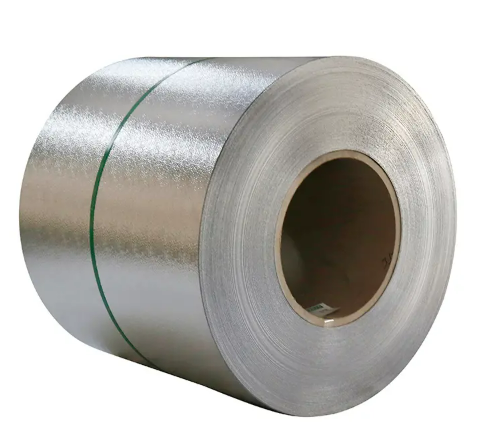
Applying aggressive embossments to thin pre-painted coils creates significant manufacturing risks. The roller dies force the metal into sharp peaks and valleys. If the underlying metal is too thin, it flexes excessively during the forming stage. This excessive movement stresses the bonded paint layer.
High-quality polyester coatings usually offer excellent flexibility. However, stretching an undersized gauge beyond its mechanical limit compromises the paint adhesion. This failure leads to blistering, cracking, or peeling under normal environmental stress. You must pair the appropriate paint system flexibility to the correct metal thickness.
Common Mistake: Specifying an ultra-thin flat sheet and expecting it to survive a heavy diamond tread embossment intact. The resulting stretch will almost certainly fracture the topcoat.
Specifying excessively thick gauges introduces an entirely different set of operational problems. Pushing thick metal through embossing rollers requires immense hydraulic pressure. Over-specifying gauge thickness accelerates wear and tear on manufacturer roller dies. The hardened steel dies degrade faster, increasing production downtime and maintenance costs.
Furthermore, standard processing equipment features strict physical limitations. Cut-to-length lines and slitting machines cap out at specific thicknesses. Coil weight limits also dictate production feasibility. Most standard processing facilities handle coil weights strictly between 6,000 and 10,000 lbs. Exceeding these capacity limits halts production and forces costly custom handling procedures.
Buyers must critically evaluate the intended purpose of the embossed pattern. You generally classify patterns into two categories: aesthetic and functional. Aesthetic patterns include stucco, velvet, cedar, and pebble designs. These focus primarily on light dispersion and hiding surface imperfections.
Functional patterns prioritize physical performance over looks. Designs like heavy tread or deep dimples control friction, prevent slipping, and disperse standing water. They also enhance heat dispersion in HVAC units. Matching the pattern type to your ultimate end-use goals prevents costly over-engineering.
Modern procurement strategies prioritize environmental, social, and governance (ESG) metrics. You should actively assess manufacturers offering custom pre-cutting and slitting services aligned directly to your gauge requirements. Standardized master coils often leave unwanted offcuts during final fabrication.
Exact sizing minimizes scrap metal waste on your factory floor. You only pay for the material you actually use. This efficient approach optimizes shipping logistics, lowers handling risks, and helps your facility meet corporate sustainability benchmarks. Less waste translates into a leaner, greener production cycle.
Procuring the perfect material means nothing if your facility cannot physically process it. You must ensure the specified gauge and total coil weight match your specific uncoiler specifications. Every machine features a maximum weight rating and specific mandrel dimensions.
Standard incoming and outgoing inner diameters (ID) generally require 16" to 20" compatibility. Failing to verify these inner and outer diameter (OD) limits results in coils sitting unusable on the loading dock. Always double-check your equipment manuals before releasing a purchase order.
A poorly written RFQ generates inaccurate pricing and mismatched material expectations. Clear communication ensures the processing facility understands your exact needs. Use a standardized checklist approach to lock down critical data points before requesting bids.
Include these essential parameters for accurate processing:
Alloy Designation: Specify the exact grade (e.g., Alloy 3003 or 1100).
Temper: Define the required hardness and non-heat treatable parameters (e.g., H14 or H24).
Decimal Gauge: List the precise thickness in decimals (e.g., 0.024") rather than vague gauge numbers.
Width & Length: Provide exact slit widths and cut-to-length dimensions.
Pattern Type: Clearly state the design (e.g., Stucco vs. Tread).
Coil Weight Limits: State your maximum facility handling capacity (e.g., max 8,000 lbs).
You must highlight the necessity of testing a sample coil, especially if your production line is transitioning from flat sheet metal to embossed material. The embossing process drastically alters the panel's rigidity. The material behaves differently under tension.
This new rigidity profile may require immediate adjustments to your own roll-forming or stamping equipment. Stiffer metal pushes back against tooling. Prototyping allows your engineering team to tweak machine pressure settings, adjust bend radii, and verify coating adhesion before running a high-volume batch.
Selecting the correct gauge for your embossed materials relies on careful analysis of your application environment. The process is intrinsically linked to your alloy choice and whether your core requirement is structural strength, thermal conductivity, or visual defect concealment. Small adjustments in thickness yield massive differences in both product performance and manufacturing efficiency.
To move forward effectively, we recommend these action-oriented next steps:
Audit your current flat-sheet inventory to identify potential areas for gauge-reduction savings enabled by the added stiffness of embossing.
Calculate the exact coil weight and ID/OD limits of your in-house uncoiling equipment.
Request precise pattern samples from verified processors to test paint coating adhesion and mechanical formability.
Standardize your RFQ documentation to include alloy, temper, decimal gauge, and exact pattern requirements.
A: No. It alters the surface texture without changing the actual metal thickness. In many cases, the rolling process geometrically increases the panel's physical rigidity and overall durability.
A: Stucco creates a micro-texture (like an orange peel) primarily used for light dispersion, aesthetics, and scratch concealment. Diamond tread is a raised, aggressive pattern used for structural traction and heavy-duty wear.
A: Yes, provided the manufacturer uses highly flexible polyester coatings. The gauge and alloy combination must also be properly matched to your specific required bend radius to prevent blistering or peeling.


 English


