
Views: 0 Author: Site Editor Publish Time: 2026-06-28 Origin: Site


Procurement managers and manufacturing engineers constantly evaluate pre-finished metals to streamline complex production lines. Finding the ideal material helps eliminate secondary processing steps while maintaining premium aesthetic standards. Unfortunately, traditional post-fabrication batch anodizing frequently introduces serious production bottlenecks. It often causes frustrating color matching inconsistencies. This drastically increases per-unit costs during high-volume manufacturing runs. Dipping individual parts simply creates unpredictable finishing schedules.
Introducing continuous anodized aluminium sheet coil provides a highly scalable solution. This pre-finished material elegantly shifts the critical surface treatment to the very beginning of your supply chain. You gain exceptional formability alongside remarkably predictable quality control. This comprehensive guide covers crucial technical distinctions and strict evaluation criteria. We also detail realistic fabrication limits and proven strategies for shortlisting reliable suppliers.
Process Efficiency: Continuous coil anodizing delivers superior color and finish consistency across high volumes compared to traditional batch processing.
Formability: High-quality anodized aluminium sheet can be roll-formed, stamped, and bent post-anodizing, provided specific bend radii guidelines are followed.
Cost-to-Scale: While upfront material costs are higher than raw aluminum, eliminating the post-fabrication finishing step drastically reduces total manufacturing lead times and overall part costs.
Sourcing Criteria: Successful procurement requires aligning alloy grades (typically AQ 5005), anodic film thickness, and supplier processing capabilities (slitting/cut-to-length).
Understanding the fundamental production differences helps you make better material choices. Continuous coil anodizing relies on a fully automated production line. Operators first unwind the raw aluminum coil. High-speed rollers then pull it continuously through a series of chemical baths. These critical stages clean, etch, and anodize the bare metal. Subsequent tanks add electrolytic color and completely seal the porous surface. Finally, the system rewinds the finished material into a highly uniform roll.
Batch anodizing requires technicians to manually clamp individual cut parts onto metal racks. They then submerge these loaded racks into anodizing vats. This traditional method creates several known quality issues. First, the clamping points leave visible "rack marks" where the chemical process cannot reach the metal. Second, electrical current distributes unevenly across complex shapes in a batch tank. This uneven current causes significant edge-to-edge color variations. You might notice one end of a panel looking slightly darker than the other.
Continuous processing completely eliminates these common defects. The metal unwinds and travels flat through the chemical baths. The electrical current remains perfectly consistent across the entire web of the sheet. You get uniform color matching from the start of the coil to the very end.
The continuous process literally changes the structure of the anodic layer. Batch anodizing slowly builds a thick, rigid oxide layer. This rigid layer cracks heavily if you try to bend the part later. Continuous coil anodizing happens much faster. This rapid oxidation builds a denser, remarkably flexible anodic layer. This unique cellular structure allows post-process fabrication. You can stamp, bend, and roll-form the pre-finished material without destroying the protective surface.
Switching to a continuous pre-finished metal directly improves your manufacturing predictability. You instantly eliminate the unpredictable lead times of third-party metal finishers. Your quality control teams inspect incoming raw material rather than finished parts. This catches visual defects before you spend money cutting and stamping the metal. Architects and appliance designers love the uniform aesthetics. They get perfect color matches across massive architectural facades or matching consumer appliance panels.
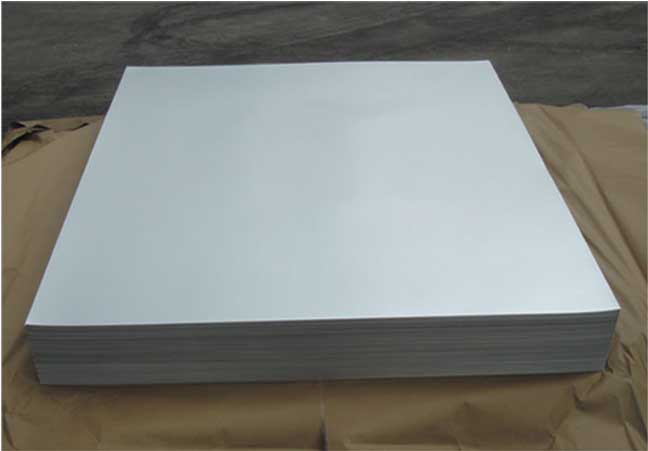
You must properly match material specifications to your exact end-use requirements. A robust feature-to-outcome framework prevents over-specifying costly finishes. It also prevents under-specifying materials for harsh environments. Every application demands a specific combination of alloy, thickness, and color formulation.
Not all aluminum behaves identically in an anodizing tank. You must specify Anodize Quality (AQ) alloys for visual applications. Standard alloys often contain impurities. These microscopic impurities cause streaks, structural dullness, or unpredictable color shifts during oxidation. AQ alloys undergo strict metallurgical control to ensure a flawless visual finish.
Feature-to-Outcome Framework Chart | ||
Alloy Grade | Primary Characteristic | Best End-Use Application |
|---|---|---|
5005 AQ | Excellent color uniformity and clear aesthetic finish. | Architectural panels, interior wall cladding, consumer electronics. |
5052 AQ | Higher tensile strength and good corrosion resistance. | Structural components, transportation panels, heavy-duty appliances. |
1100 / 3003 | Highly formable but less consistent visual finish. | Hidden lighting reflectors, utility trim, basic nameplates. |
When selecting your material, 5005 AQ remains the gold standard for architectural applications. It reliably produces an elegant, uniform appearance. If your design requires more structural rigidity, 5052 offers higher strength. However, 5052 might show a slightly more yellowish or grayish tint when clear anodized.
The thickness of the anodic layer dictates its long-term durability. The industry measures this layer in mils or microns. The American Architectural Manufacturers Association (AAMA) and military specifications (Mil-Spec) provide clear performance baselines.
For exterior architectural projects, always specify a Class I finish. This requires a minimum thickness of 0.7 mil (approximately 18 microns). A Class I finish survives intense UV exposure, salt spray, and extreme weather. It resists fading and chalking over decades.
For interior applications or standard consumer goods, a Class II finish works perfectly. This requires a minimum thickness of 0.4 mil (approximately 10 microns). Class II provides excellent wear resistance against daily handling, cleaning chemicals, and minor abrasions. Specifying Class II for indoor use saves material costs without sacrificing performance.
Electrolytic coloring provides the most stable hues for anodized aluminium sheet. This process deposits inorganic metal salts deep inside the porous oxide layer. The metal salts permanently alter the color. Standard electrolytic options include clear, champagne, bronze, and deep black.
Custom dye matching allows for vibrant reds, blues, or golds. However, organic dyes fade much faster under direct sunlight than electrolytic metal salts. Always request physical limit samples from your supplier. These samples define the acceptable "light-to-dark" tolerance range for your specific production run. Approving physical limit samples prevents costly disputes regarding color accuracy.
Transitioning to pre-anodized materials requires evidence-oriented transparency. The anodic layer physically alters how the metal behaves during fabrication. Your engineering teams must respect specific mechanical limits. Ignoring these realities leads to severe cosmetic defects and high scrap rates.
The anodic film is essentially an aluminum oxide ceramic. Like any ceramic, it possesses high hardness but low elasticity. When you bend the metal sheet, the exterior radius stretches. The rigid ceramic layer cannot stretch, so it fractures. We call this microscopic fracturing "crazing."
Crazing appears as a slightly frosted or hazy line along the bend axis. It feels rough to the touch. You cannot entirely eliminate crazing on sharp angles, but you can skillfully manage it. You must specify appropriate inside bend radii. A general rule requires a minimum radius of 2T to 3T (two to three times the material thickness). Softer tempers and thinner anodic layers allow for tighter bends with minimal crazing.
Best Practices for Bending:
Always form the metal perpendicular to the rolling grain direction.
Use urethane tooling or protective masking tape to prevent die marks.
Keep the workshop environment warm; cold aluminum cracks more easily.
Test different tempers (like H14 vs H32) to find the ideal balance of strength and formability.
Coil anodizing finishes the top and bottom surfaces of the continuous web. When you shear, punch, or cut the material afterward, you expose bare aluminum on the raw edges. This exposed edge lacks the protective anodic layer.
You must implement a strategic mitigation plan for exposed edges. The most common solution involves clever mechanical design. Engineers simply design framing systems, extrusions, or overlapping joints that hide the raw edges from view. For outdoor environments, you must evaluate the natural oxidation process. Bare aluminum naturally forms a thin, clear oxide layer when exposed to oxygen. In many non-coastal environments, this natural passivation sufficiently protects the hidden edge from progressive corrosion.
You must fundamentally rethink your assembly methods. The anodic coating functions as a highly effective electrical insulator. You cannot directly spot weld or arc weld pre-anodized surfaces. The welding current simply will not pass through the ceramic layer.
If you absolutely must weld the material, you must mechanically grind away the anodic layer first. This adds a laborious secondary step and creates an ugly visible scar. We highly recommend abandoning welding entirely. Instead, transition your designs to mechanical fastening systems. Rivets, self-tapping screws, interlocking hems, and high-strength industrial adhesives provide excellent structural integrity without damaging the premium finish.
Sourcing pre-finished metal requires vetting specialized partners. You cannot simply buy this material from a basic hardware distributor. You need to evaluate metal service centers and dedicated anodizing mills across several strict dimensions.
We recommend using a rigorous, multi-point evaluation system to find the right partner.
Processing Capabilities: A premium supplier does more than just sell metal. They must offer precision slitting services to cut massive master coils down to your exact required widths. They should provide cut-to-length blanking to deliver flat, perfectly squared sheets. They must also expertly apply custom PVC masking. This specialized protective film prevents scratching during transit, handling, and harsh stamping operations.
Inventory and Lead Times: Global supply chains experience frequent disruptions. Assess your potential partner's stocking programs. Do they warehouse significant volumes of standard clear and bronze material? Custom color runs typically require extended lead times. A strong supplier buffers your production schedule by holding strategic safety stock in their domestic warehouses.
Minimum Order Quantities (MOQs): Buying direct from an anodizing mill usually requires massive MOQs, often exceeding 10,000 pounds. This locks up significant capital. Conversely, master coil distributors break down these large runs. They happily sell smaller 1,000-pound quantities. You must align your purchasing volume with the correct tier of the supply chain.
Quality Assurance and Compliance: Environmental regulations constantly evolve. Demand complete documentation from your suppliers. Look for strict RoHS and REACH compliance certificates. This ensures their chemical processes avoid banned heavy metals and toxic substances. Furthermore, mandate ISO 9001 certification. ISO standards guarantee they maintain rigorous, documented procedures for color matching and thickness verification.
Supplier Vetting Checklist Matrix | ||
Evaluation Dimension | Red Flag (Avoid) | Green Flag (Ideal) |
|---|---|---|
Tolerances | Cannot guarantee slitting width within +/- 0.010 inches. | Provides documented precision slitting and tight flatness guarantees. |
Sample Support | Refuses to provide limit samples for custom colors. | Proactively ships high/low color limit chips for engineering approval. |
Masking Options | Only offers generic, low-tack clear film. | Offers laser-safe, deep-draw, and UV-resistant PVC masking varieties. |
Common Mistakes in Procurement: Many purchasing agents mistakenly focus solely on the per-pound price. They fail to verify the alloy's AQ status. Receiving standard commercial-grade aluminum instead of AQ aluminum causes massive visual rejection rates on the final assembly line. Always demand clear material test reports (MTRs) before accepting delivery.
Transitioning to continuous pre-anodized aluminum represents a highly strategic manufacturing upgrade. It fundamentally optimizes high-volume production lines by permanently eliminating the chaotic batch finishing step. You achieve remarkably consistent colors, predictable delivery schedules, and drastically simplified quality control. The continuous web process creates a uniquely flexible ceramic layer that readily supports sophisticated post-fabrication forming.
However, success requires careful engineering foresight. Your design teams must diligently account for minimum bend radii to manage crazing. They must also engineer clever mechanical joints to hide raw cut edges and avoid problematic welding.
To safely begin this transition, take immediate action with your engineering department. Ask them to define your exact AAMA finish class and alloy requirements. Next, request detailed technical data sheets and physical color sample chips from a vetted supplier. Finally, secure a small pilot run quote to thoroughly test the material's formability on your actual production dies.
A: Yes, but it requires respecting minimum bend radii to limit micro-cracking. The continuous coil process creates a significantly more flexible coating than traditional batch anodizing. By adhering to a 2T to 3T bend radius and using proper urethane tooling, you minimize visible crazing and protect the overall aesthetic finish.
A: Coil anodizing is generally highly competitive at scale. It offers a premium, translucent metallic aesthetic that powder coat simply cannot replicate. Furthermore, anodizing actually integrates completely into the metal substrate. It will never peel, flake, or blister over time, unlike surface-applied powder coatings.
A: Cut edges will expose raw, uncoated aluminum. In many architectural applications, clever design hides these edges using specialized extrusions or framing. Structurally, the exposed raw edge will form a natural, clear oxide layer over time. This natural passivation safely protects the metal from progressive environmental corrosion.


 English


